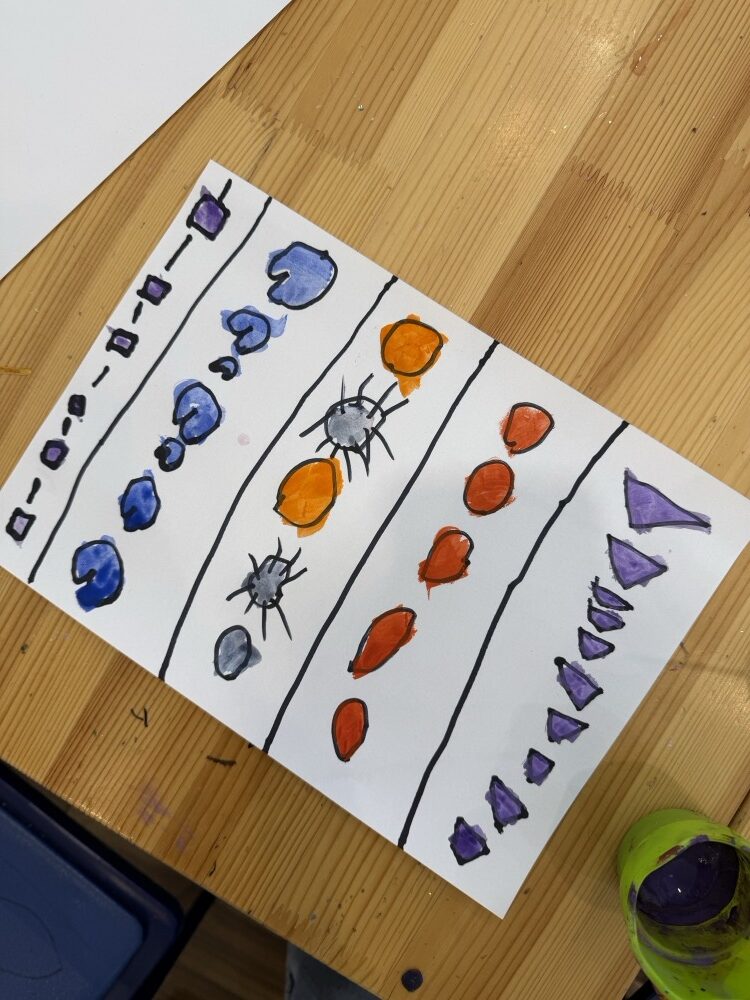
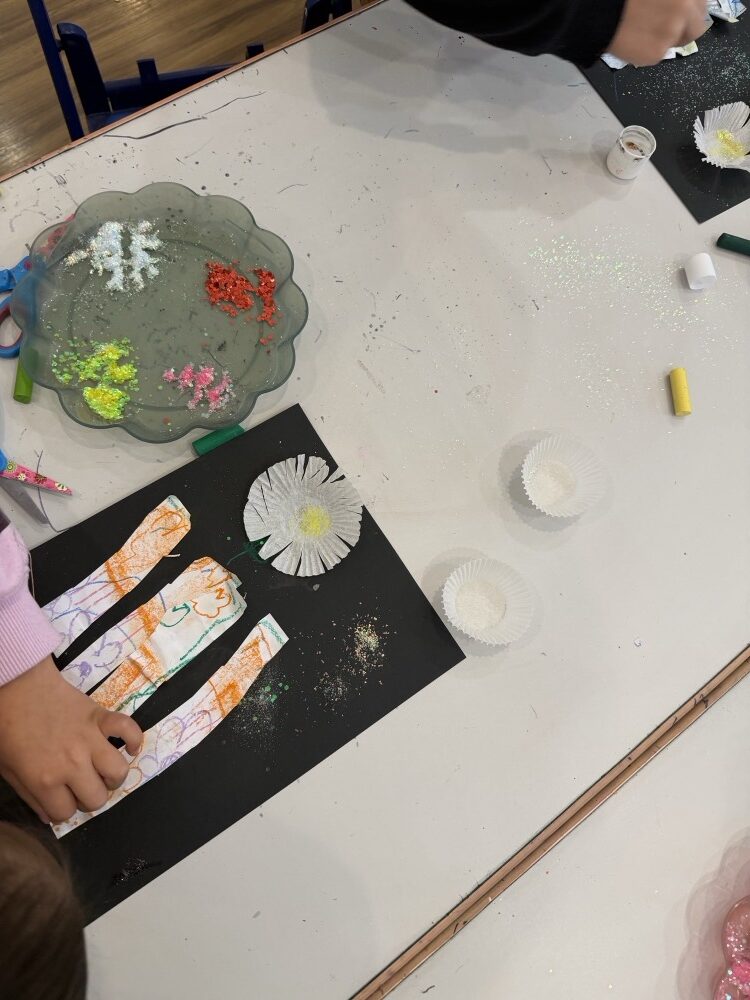
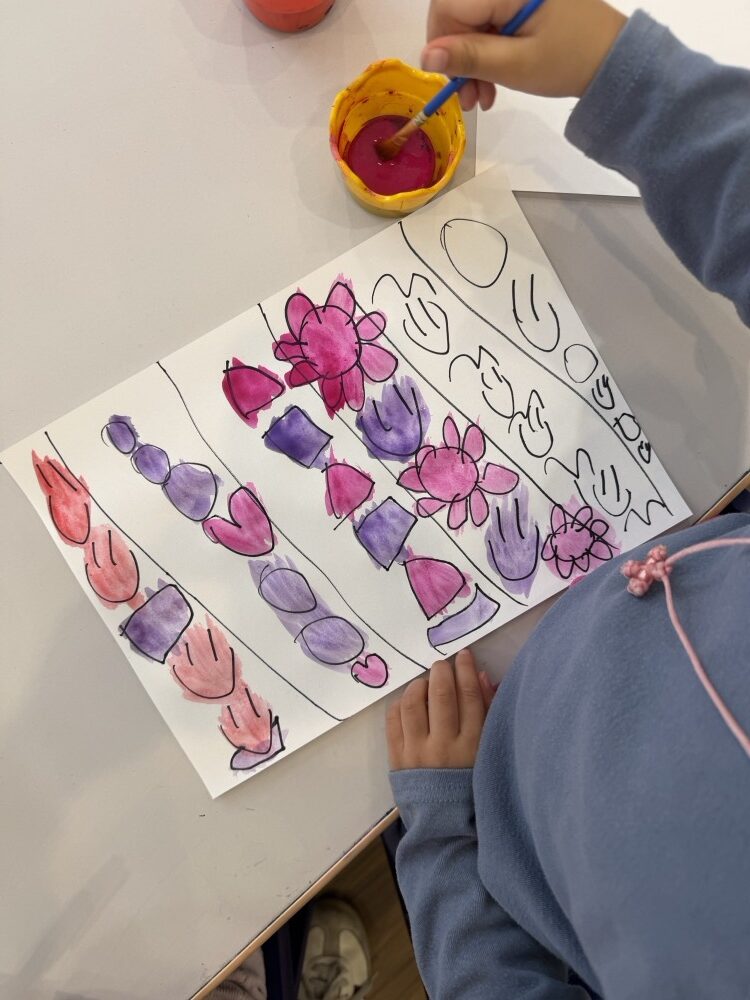
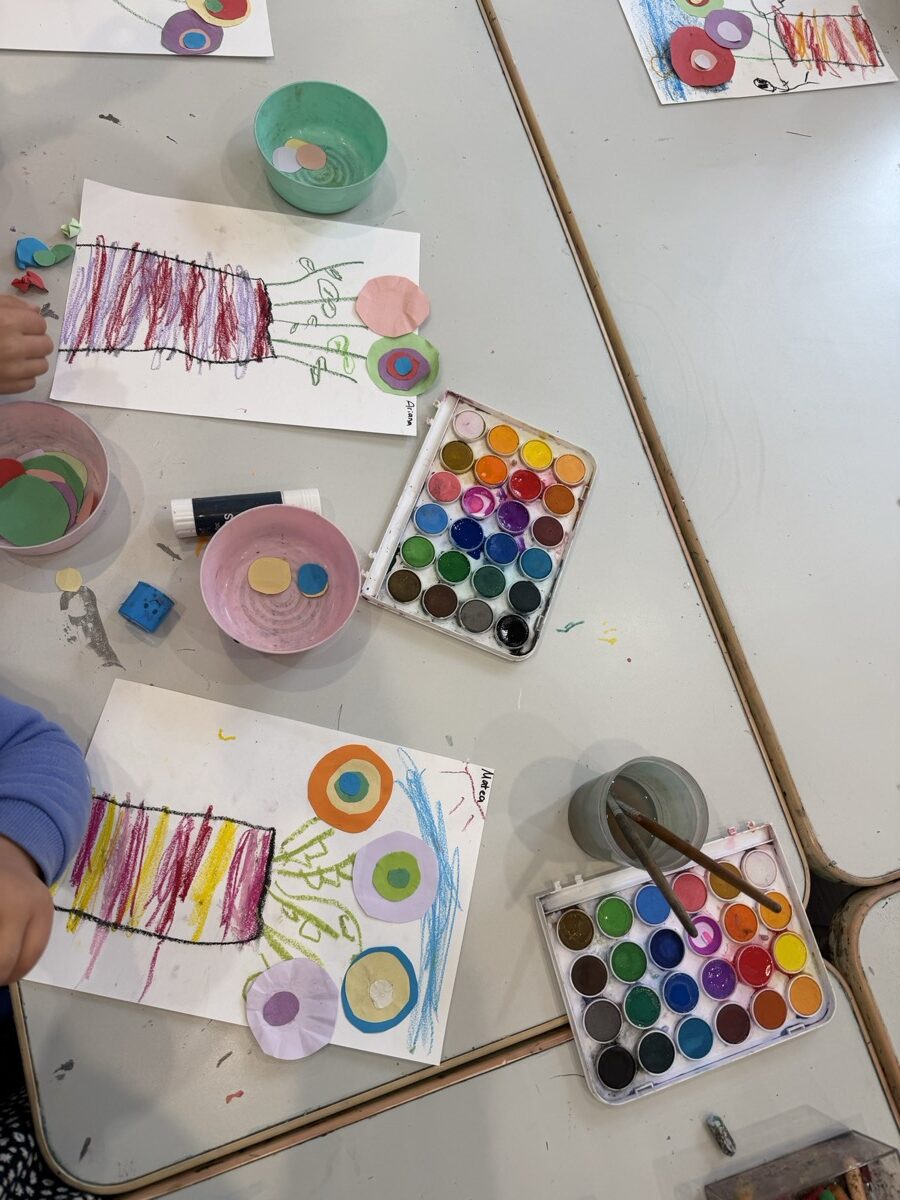
Here is how to run an art session the whole room stays with, and the mess never takes over.
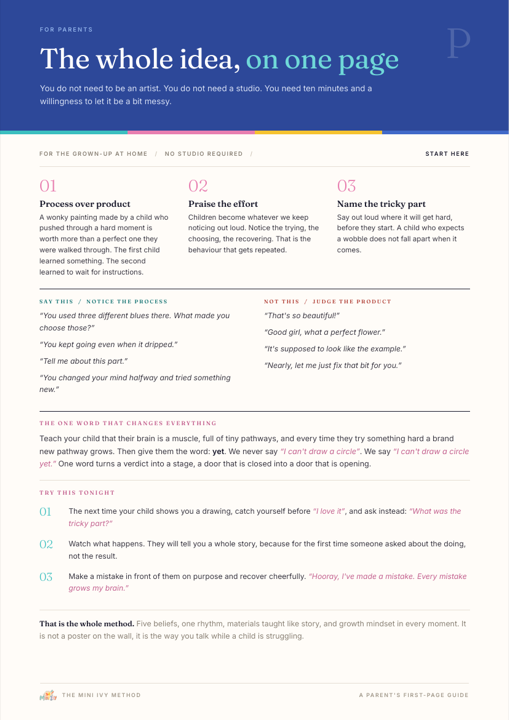
You have the ideas from Pinterest and the training days. What nobody gave you is the how: how to set up, how to introduce the materials, and the exact words that bring a whole room in instead of overstimulating it. I worked it out over fifteen years of teaching, and I have written all of it down.
No more bracing for art time. No more guessing what to say. No more identical crafts.
Nothing is charged. The printables are yours whether you ever buy or not.
Fifteen years of teaching. Four running the studio. Used by educators in Australia and overseas.
“I have followed Mini Ivy for years, so I was thrilled to see Valando finally put all of her knowledge in one place. If you are on the fence, trust me, this will be the best investment you make.”
Melissa, teacher and studio owner, Melbourne

You are not failing. This is genuinely the hardest age to teach art to.
It turns to chaos before it turns to learning, unless you know how.
The Method is the how.
I know, because the first Mini Ivy session I ever taught ended with me sitting in my car, crying. Overwhelmed, overstimulated, chaos from start to finish. What changed everything was not talent, and it was not ten more years in the room. It was learning that it comes down to three things: how you set up the materials, how you introduce them, and how you bring the children into the lesson. They are capable, even at three. It is just how you do it. That is what I have written down for you.
If you nodded at even two of those, stay with me. The next part is about why it happens, and it is not you.
That is the how, written down: the set-up, the introduction and the words. Your first lesson is waiting the moment you join.
It is the Sunday night hunting for ideas, and the session that still ends in noise.
It is dreading the day art is on the plan.
It is quietly deciding you are just not an art person, when nobody has ever shown you how.
And it is the children. Every session that runs on craft and chaos teaches them the same lesson: there is a right answer, and they are getting it wrong.
I have watched too many bright little children decide they are not good at art before they turn six. They were never untalented. They were never taught.
You can keep running on instinct and recovering. Or you can learn the how once, and keep it for life.
I did not get good at this by becoming more talented. I got good when I learned what actually decides a session. There are three things, and every one of them can be learned.

The set-up decides the session. What is on the table and what is not, where the materials sit, what you do before a single child sits down. It is why one session holds and another tips over.
How you introduce a material decides how children use it. Teach it like a story and they hold it, explore it and look after it. Hand it over cold and the table gets away from you.
How you bring the room in decides whether you keep them. The words you use, in the order you use them, from the moment they sit down to the moment they share.
Every word of it is written down in the Method, so you are never guessing.
Here is what that looks like on a Tuesday morning.
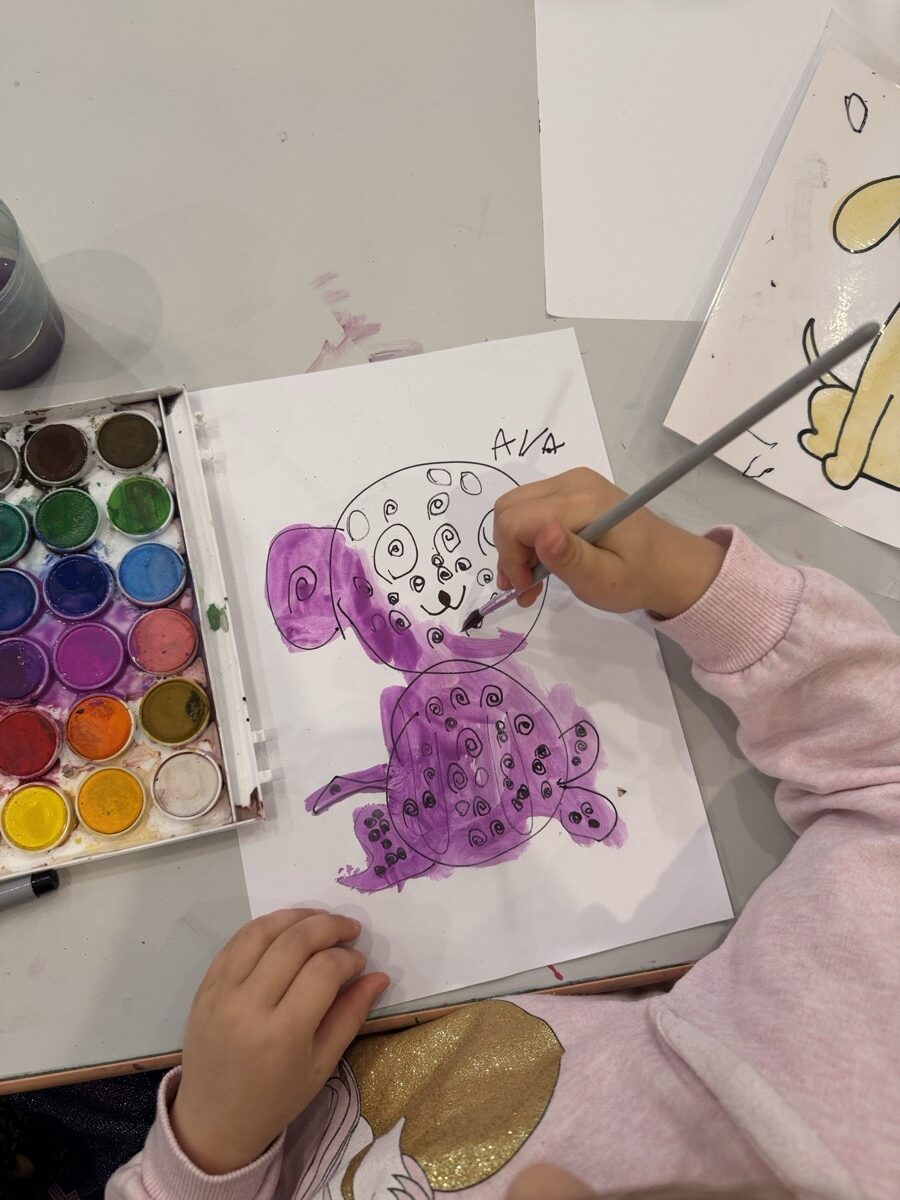
It is ten o'clock. Eight four year olds, a table of watercolours, and the first one is saying "I can't do it" before the brush is even wet. Another wants you to draw it for them. Someone has finished in forty seconds and wants to know what's next.
Today your stomach does not drop. You listened to this lesson on the drive in. There is no example on the table for anyone to copy, so nobody is comparing. You say the words you practised, count to twenty in your head, and wait. The child who said "I can't" picks up the brush.
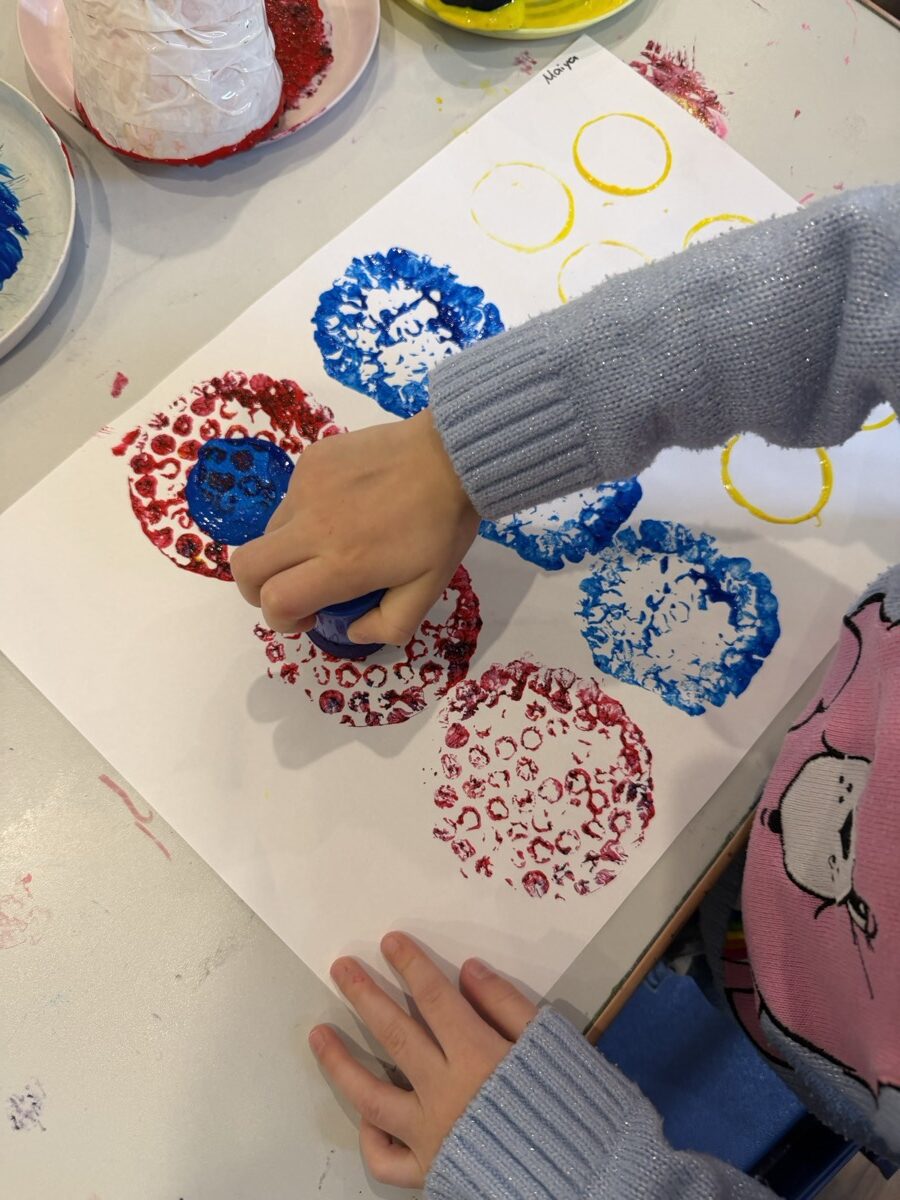
Twenty minutes later nobody has made the same painting twice, and you know what each child was learning, because you planned it that way.
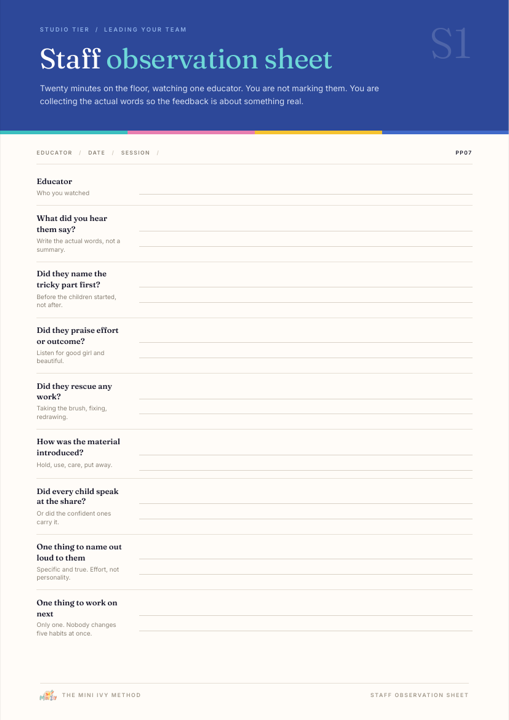
And if you lead a team, picture walking past three rooms on a Thursday. Different educators, same rhythm. The new starter is running her first session off the page, and it is holding. When a parent asks what makes your art program different, you have a real answer.
That is not a talent you were born with. It is a rhythm, a structure and a set of words, and every piece of it is in the Method.

That could be you on Monday. You don't need another training day. You need the rhythm and the words, and you can start listening on the drive in tomorrow.

This is what the lessons are built around, one session at a time.
You do not have to take my word for it.
A teacher and a studio owner. Read what changed for them, not just for the children.
I have always found art really stressful. I wanted to understand process over product, but in a world where everything has to be perfect, I did not know where to start. It is so nice to learn to slow down as an adult and actually enjoy the process with the kids. What they create is incredible. This has honestly been life changing.
I have followed Mini Ivy for years, so I was thrilled to see Valando finally put all of her knowledge in one place. It is absolutely amazing. If you are on the fence, trust me, this will be the best investment you make. You do not just learn, you feel inspired again to do what you love.
You do not need another training day. You need the set-up, the introduction and the words. Start listening on the drive in tomorrow.
This is not a folder of PDFs you will never open. It is thirty four recorded lessons, every word written first and then spoken, so you can learn the way you actually have time to learn. Forty five if you take Studio.
Every lesson has a recording, the words to say, what usually goes wrong, and a sheet you can print. This is what you are actually buying, not a promise of it.


Seventy three ready-to-print sheets, sixty seven of them in Individual, designed properly, so the method leaves the screen and ends up on your wall and on your table.


Every one of these came out of the method you are about to learn. No example on the board to copy. No adult finishing it off at the end.


Art was never the point.
The child who believes they can try is the point.
If you teach or lead children aged three to six, and art is the part of the day that turns to mess and noise before it turns to learning, this was built for you. In a classroom, a centre or a studio.
You have the Pinterest ideas. But when the materials come out the room tips into noise, and you are managing it instead of teaching it.
For you this means: how to set up and introduce each material so the room stays with you, and the words to say, every time. It logs as PD, certificate included.
Art is the lesson you are handed with a full room, no plan and twenty minutes to fill.
For you this means: a rhythm that holds with a full class, and scripts so you are not inventing the lesson at 8:50 in the morning.
You want genuine creative development in your room, not just busy hands. Engaging the whole group is the hard part.
For you this means: one method your whole room runs the same way, with every word written down, so it survives staff changes and hard weeks.
Art looks different in every room, and it depends on who is on.
For you this means: one shared method for your whole site, one licence for every educator who teaches there, and a certificate you can count towards your PD.
You can teach it yourself. Getting every educator to run a session that is engaging and fun, without chaos, is the harder problem.
For you this means: one licence for every educator at your studio, the leadership module, and the sheets that keep everyone teaching it the same way, so parents see the same session whoever is on.
If you nodded at any of those, you're in the right place. If you want a craft pack that tells children what to make, this is not it. If you want to know how to run the room, keep reading.
Whichever room is yours, it is the same method: set up, introduce, engage. Start listening on the drive in tomorrow.
Most people reading this are already good with children. That is exactly why this is worth two minutes. These are the questions that separate running an art session from teaching art.
If those landed uncomfortably, that is not a failing. Nobody trained you for any of it, in any degree or any training day. It is simply the part that never got taught, and it is the part this fixes.
This is the difference a method makes. You can have it before your next session.
Everything in the Method started in a real studio. The research is why it holds up.
Carol Dweck's research found children praised for effort were more likely to choose harder challenges and keep going after a setback than children praised for being smart.
In the Method: the sentence is written for you.
A study following children from school entry found fine motor skill predicted later reading and maths.
In the Method: the materials, in order, build the grip before anyone is asked to write.
Harvard's Center on the Developing Child says focus and self-control are built through practice and responsive back-and-forth with an adult.
In the Method: a predictable rhythm and a ready sentence let one educator hold that when eight children want her at once.
Sources: Mueller & Dweck, 1998, Journal of Personality and Social Psychology. Grissmer et al., 2010, Developmental Psychology. Harvard University Center on the Developing Child.
Qualified early childhood educator. Fifteen years teaching, four of them running the studio, and a mum of three. This is not theory she read. It is what she does every week.
Mini Ivy is a structured creative development program for 3 to 6 year olds, run by qualified early childhood educators in a studio open five days a week. The Method is that exact practice, refined over hundreds of real sessions and written by Valando herself.
Everything we do in our studio five days a week is in here, written down so you can run it in your room this week.
They started exactly where you are. The moment you pay, your first lesson is waiting for you.
This is not a PD day you forget by Friday. Not a folder of activity ideas. Not another craft curriculum. It is the system a real studio runs five days a week, in your ears.
Pay in full by card, Klarna or Zip, or choose 3 monthly payments above. Secure checkout by Stripe. Lifetime access, every future update included.
This licence covers the one site you name above. Pay in full by card, Klarna or Zip, or choose 3 monthly payments above. Secure checkout by Stripe. Lifetime access, every future update included.
Both are one payment, lifetime access, for every child who ever sits at your table. For a studio that is less than three days of relief cover. For a teacher it is a single payment that covers every group you will ever teach.
$599 works out at about $11.50 a week for the first year, then nothing, ever.
Fair question, and better answered than danced around. $599 is eleven sessions at our own studio, so it is real money. Here is what it is instead of.
While you are deciding, the weeks keep coming. Every one is another session you run on instinct and recover from, another stack of the same templated crafts, another small deposit into the belief that they are not good at art.
You don't get these years back. The method that fixes it already exists. It has run in our studio five days a week for years, and it is being recorded now. Joining the founding list costs nothing, takes two minutes, and holds you the lowest price it will ever be.
The Method opens on 9 October. Waitlist members get the founding price from that moment, and it stays open until 14 October. After that both tiers rise and stay there, for good.
Two of the bonuses run out before the window does. The thirty minute one to one is the first five people, not the first five days. The live session is for everyone who joins inside the window.
The Method is being recorded now. Joining is free, it holds your founding price, and we'll tell you the moment the doors open.
When the timer runs out the Method opens, and your founding price is yours for five days.
Founding access has closed. Join the list and we'll tell you the moment the next intake opens.
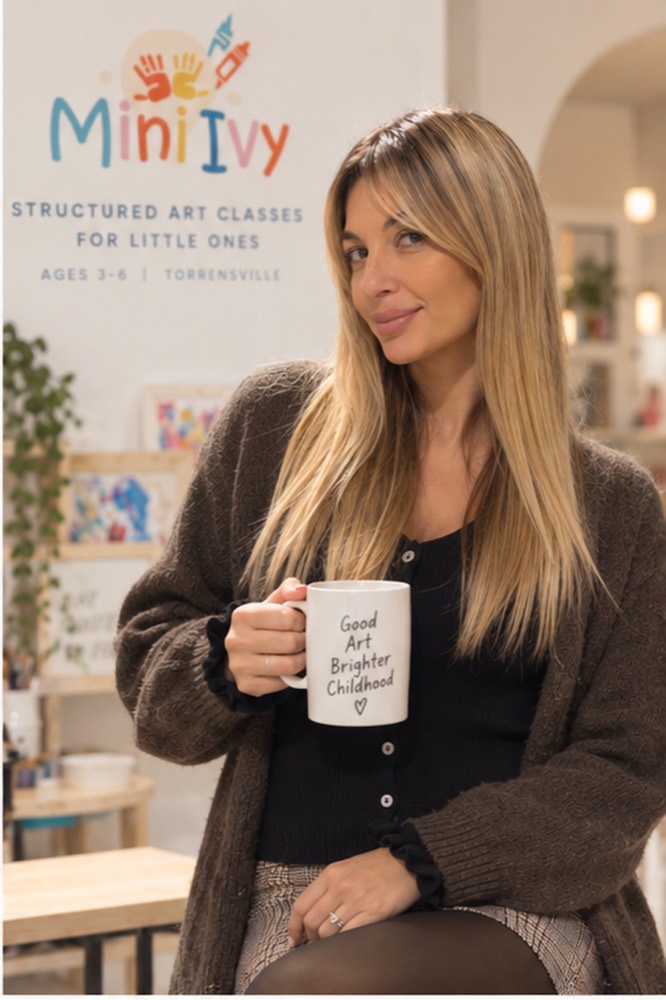
I started Mini Ivy because I watched too many bright little children decide they weren't good at art before they turned six. They had only ever met craft.
I'm a qualified early childhood educator with fifteen years of teaching behind me, in schools first and then in my own studio, which I have run for four. I have also been the teacher sitting in her car afterwards, wondering if she was cut out for this.
For two years, educators from all over the world have asked how we do it. So I'm putting the whole method in one place, and opening it to founding members at the lowest price it will ever be, for five days from launch.
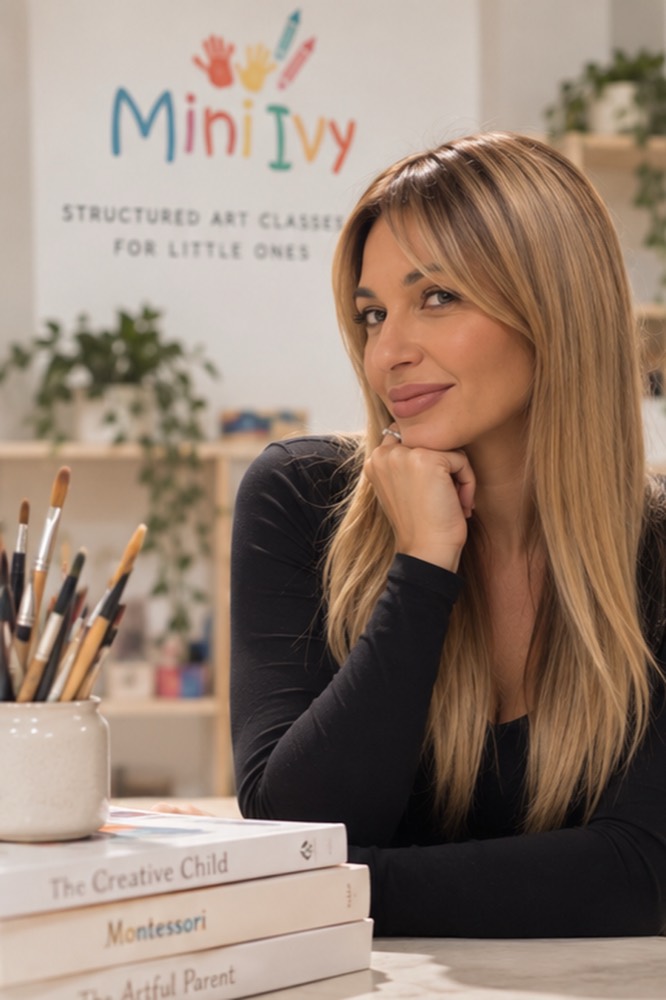
Valando Demetriou, Co-Founder, Mini Ivy
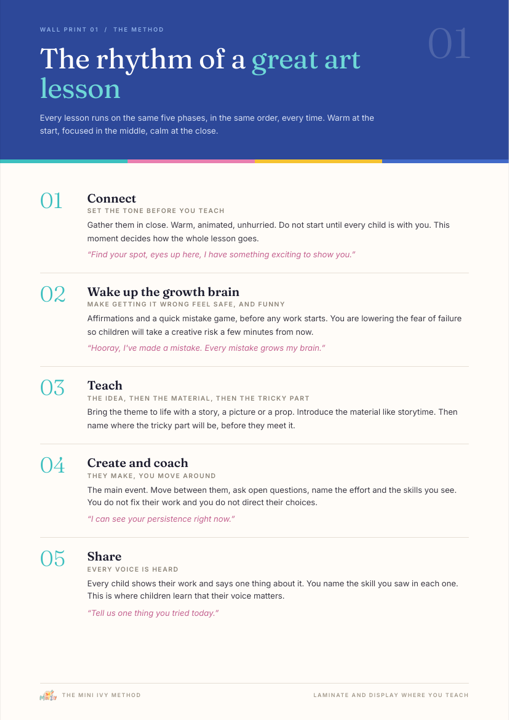
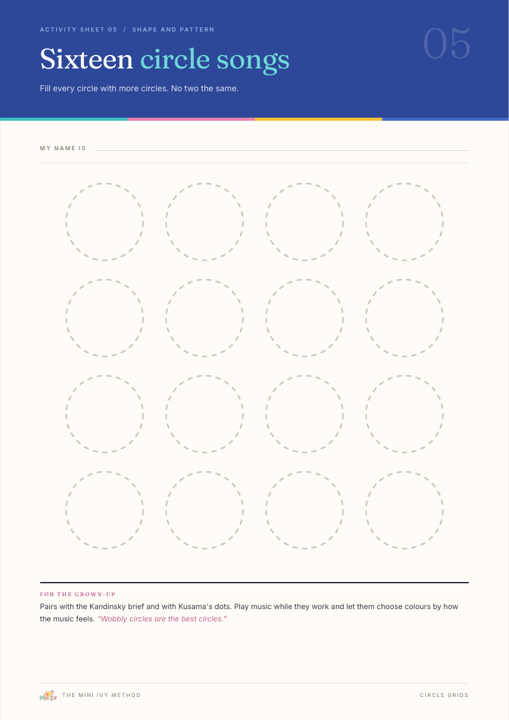
Joining the list is free, and three real pieces of the Method arrive straight away: the philosophy guide, the lesson rhythm wall print and the growth-mindset phrase cards. Not a teaser, the actual thing. Use them with real children this week. If they do not change how your sessions run, do not buy the Method. They are yours to keep either way.
Nothing is charged today. Your three printables arrive straight away: the philosophy guide, the lesson rhythm wall print and the phrase cards. Joining also holds you founding pricing from $599 for the day the Method opens.
Still deciding? If you teach little children, this changes how your art sessions feel. And if it's easier to spread it out, pay in three.
Those give you ideas and inspiration. They do not tell you how to run the moment: how to set the table, how to introduce a material, what to say when a child says "I can't". The Method is the how, in words you can use tomorrow morning.
Paint is still paint, and three year olds are still three. What changes is the setup, the way you introduce each material and the words you use, which are the things that decide whether a session stays with you or tips over. That is what the lessons teach, step by step.
Especially you. This isn't about your art skills, it's about how you set up the moment, introduce the materials and talk to the child. We give you the exact words and steps, so you're never guessing.
Three to six. That's the window we specialise in, and the method is built specifically for how children think, move and create at this age. Older or younger siblings can usually join in, but the design is for the early years.
About an hour and a half of listening in total, and you do not do it in one sitting. Each lesson is short enough for a school run or a set-up. You do not have to finish the whole thing before you start: work through Foundations, print the lesson card, and you can run your first Method lesson this week.
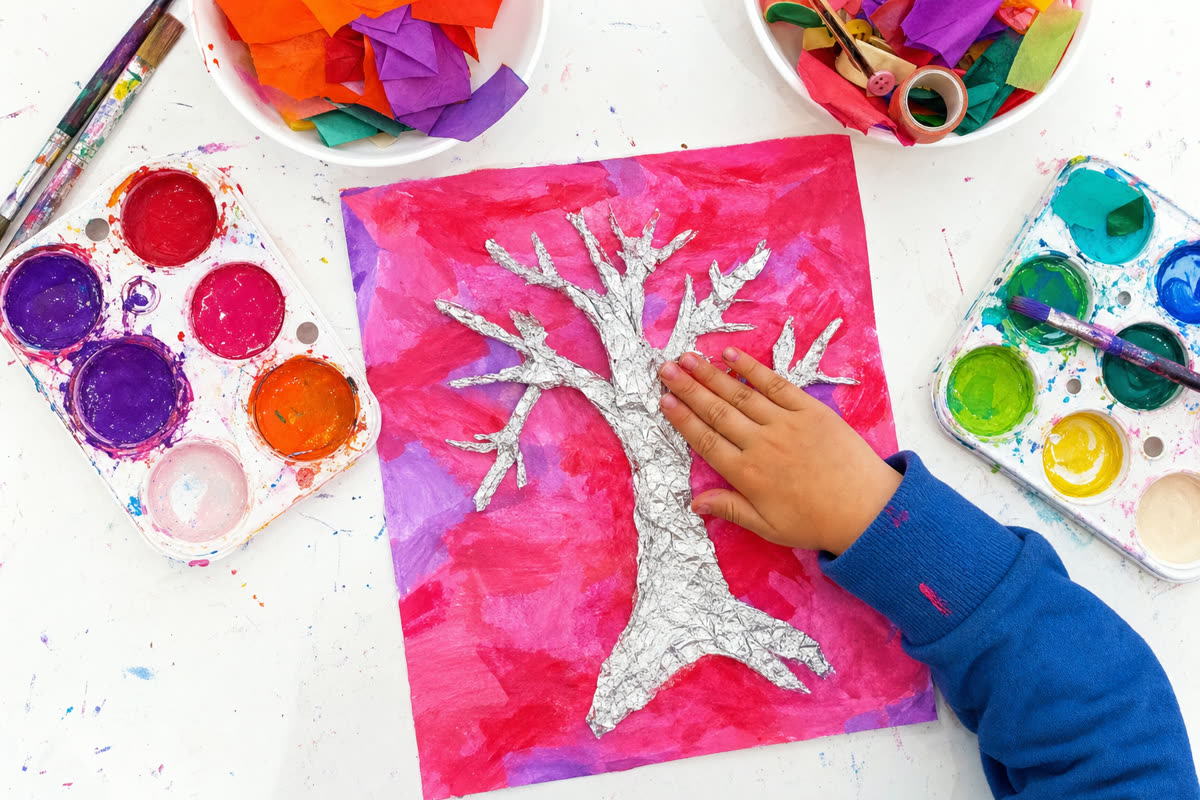
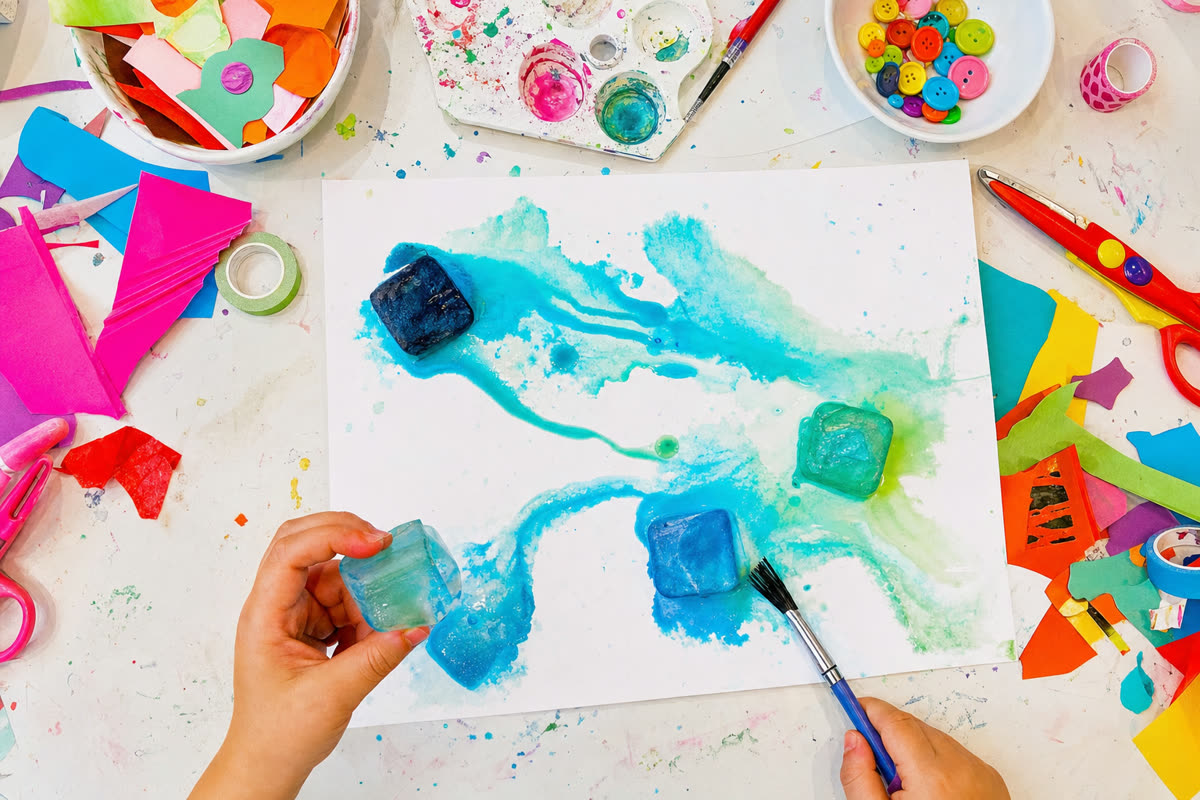
Almost nothing you do not already have. Paint, brushes, paper, glue, scissors, watercolour and oil pastels carry nearly the whole method. A handful of lessons use something specific, foil, ice, leaves from the garden, and each one tells you exactly what to gather. This is deliberately not a method that needs a budget, because most of the people who need it do not have one.
It is a private web page, yours through your own link, so there is no app to install and no password to lose. Play the lessons in any browser, on your phone while you set up or in the car. The printables download as PDFs you keep on your own computer. Lifetime means exactly that: one payment, no renewal, and every lesson or sheet added later appears in your account at no extra cost.
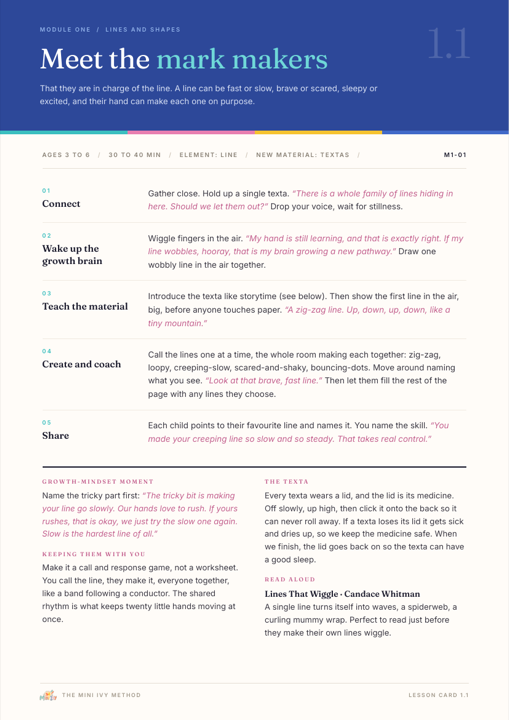
The free guides give you a real taste: a complete lesson, how we teach a material, and the growth-mindset phrase cards. The Method is the entire system: deep foundations, three core modules scripted lesson by lesson, six great-artist briefs, a theme recipe that turns any topic into a new lesson, the full materials library and the printable toolkit, with lifetime updates.
If you are one educator teaching your own group, take Individual. If you are a studio, school, kindergarten or early learning centre, take Studios, schools and centres: one licence covers one site, however many educators teach there, and it adds the leadership module and the team sheets. If you run more than one site, each site needs its own licence. If you are between the two, ask yourself who else will teach it. If anyone else will, the site licence is the one that covers them.
The licence covers one site, so it does not depend on who is on. When an educator leaves, the next one uses it. One licence is for one site only: if you run more than one, each site needs its own. The print licence covers running the toolkit across your site and sending the parent sheets home to your families. It does not cover reselling the sheets or teaching the Method as your own paid training. The full terms are on the licence page.
Yes. The method is about how young children learn and how you teach, and it travels. The course is priced in Australian dollars, so if you are buying from overseas it will cost you less than the number you see.
Educators can count the Method towards their professional development. When every lesson is ticked off, a certificate of completion appears in your course with your name and the date, and that is your record. Log the time you spend on the lessons and readings; the recordings alone run to over an hour and a half. The Method is not accredited, it is not mapped to the EYLF or NQS, and no registration board has endorsed it, so please check with your own service or board about how it can be recorded. On the Studio tier, certificates for your team are included.
The Method is digital, so the moment you have it you have all of it, and sales are final. That is exactly why three real pieces of it are free and arrive before you pay anything. Use them with real children first and decide from what happens in your own room, not from a promise I have made on a website. Your rights under Australian Consumer Law are not affected.
The live session is for every founding member. I will set the date once the founding window closes, so I am not asking anyone to hold an evening before they have even started, and it is recorded if you cannot be there. The one to one is thirty minutes with me, and it is the first five people only. If you are one of them I will email you to book a time that suits you. Bring your actual room and your actual children, that is what makes half an hour useful.
Because founding members get in first, before everything is polished and public, and help us shape it. In return you pay the founding price instead of the launch price, and you keep it for life.
You cannot get these years back, and neither can they. Somewhere in the next few months a child you teach is going to decide, quietly, whether they are one of the creative ones. That decision is completely teachable, and this is how you teach it.
Joining is free. Your three printables arrive this week, the Method opens on 9 October, and your founding price holds until 14 October.
Free to join · three real printables this week · yours to keep whether you buy or not
P.S. If you are still unsure, take the three free printables into your room this week. If the room settles, you will know exactly what to do next.
Founding price $599 ends in , then it is $999.
Pay by card, Klarna or Zip. Secure checkout by Stripe. Lifetime access, every future update included.