The weekly art school for 3–6 year olds.
Like swimming lessons. But for art. A calm, structured weekly studio class — same teacher, same time, same friends — designed to build creative confidence, focus and independence. Adelaide · Torrensville.
Valando, Co-Founder, on what Mini Ivy actually is
Find the right fit for your child.
Five gentle questions. We'll match your child with the session that suits them best.
Here's what we'd recommend for your child.
Every month is a brain-wiring month.
Between the ages of 3 and 6, your child's brain forms more new connections than at any other point in their life.
Every month between now and your child's first day at school is a month of wiring. Confidence wiring. Focus wiring. Resilience wiring.
That's not a sales line. That's biology. The window doesn't reopen.
Already feeling it? Don't wait until next term.
We're not selling art classes. We're building growth mindset.
Every Mini Ivy session is engineered to do one thing: change how your child responds to "hard." Five specific transformations parents see at home, usually within 4–8 weeks.
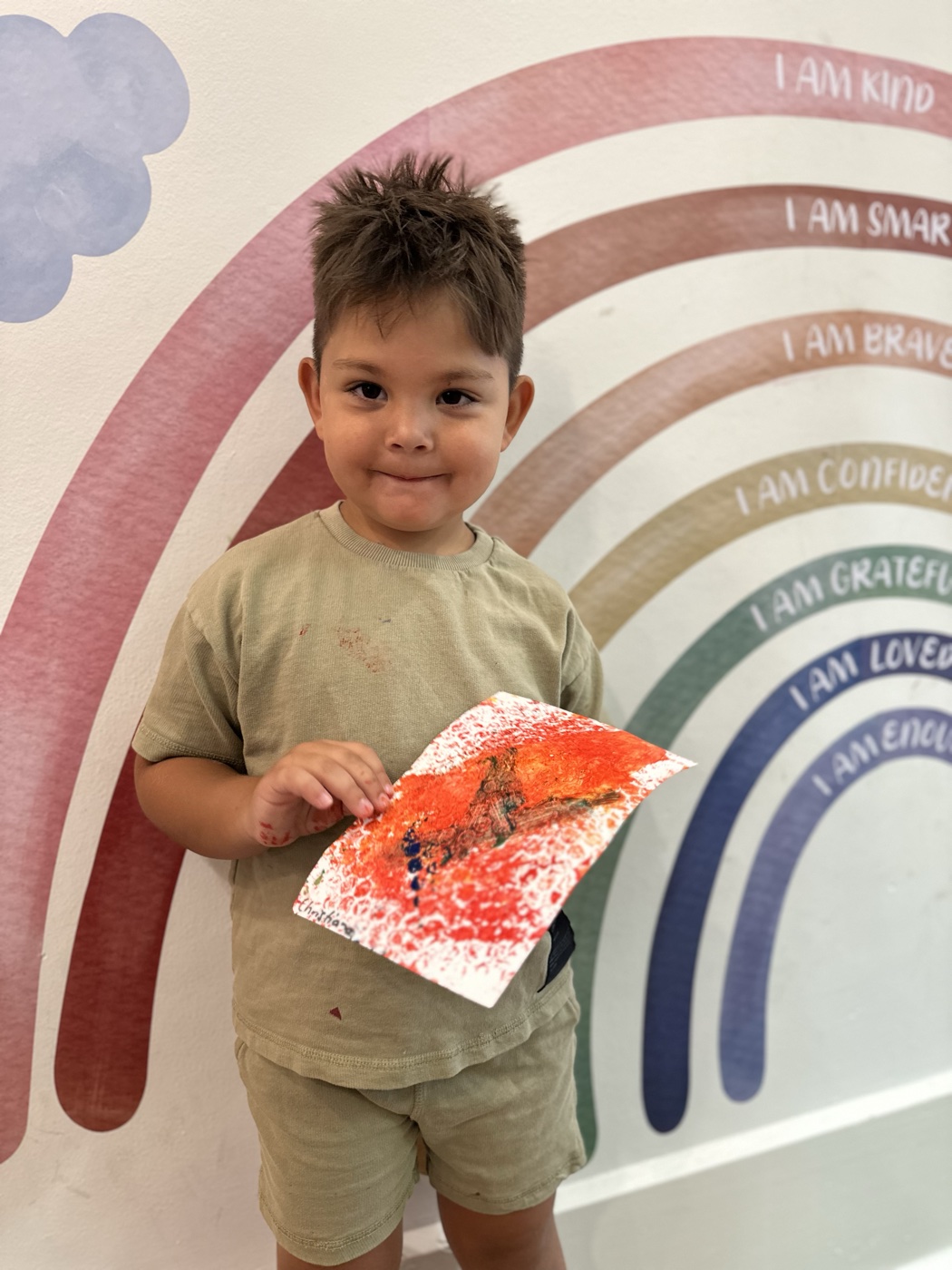
A child who can sit with frustration, try again, and praise their own effort — is a child who thrives. In school. In friendships. In life.
— Valando, Co-Founder
What your child is actually building.
Six pieces from real Mini Ivy sessions. Every project is engineered to build specific developmental skills - the kind that determine school success at 5 and self-belief at 35.
Real moments. Real focus.
Tap any reel for sound.
Not a play centre. Not a craft drop-in. An actual art school.
Built around your week
20 sessions to choose from every week — Mon to Fri, 9am to 3pm. Pick the slot that fits your family. Miss one? Make it up. There's always another session.
Real art skills
Drawing, painting, mixed media, sensory art, clay, print-making. Step-by-step technique — not just "make a craft".
Same time every week
Children thrive on routine. Same teacher, same room, same friends — week after week.
What actually changes in 6 months.
Not testimonials. Real arcs from real children. Before. During. After.
Hid behind his mum's leg every session for the first three weeks. Wouldn't speak to a teacher. Cried at every drop-off, even at the park.
Week 4 he picked up a watercolour brush by himself. Week 6 he sat in his own chair without his mum. Week 9 he was teaching another shy 3-year-old how to mix purple.
Runs through the door without looking back. Mum cried in the car the first morning. Now he asks to come on weekends.
Perfectionist. Crumpled every drawing that wasn't "right." Refused to try new mediums. Said "I can't" before she'd even tried.
Week 2 a teacher made a deliberate "wrong" line and called it the interesting bit. Week 4 Maya stopped crumpling. Week 7 she experimented with charcoal for the first time.
Now says "I can't yet" instead of "I can't." Her dad says she tries the new food at dinner now too. Same skill, different room.
Couldn't sit still for more than 5 minutes. Wouldn't focus. Family had been told he might need an assessment.
Same teacher every week. Same room. Same routine. A slow, gentle build of focus blocks. No pressure. No screens. No rushing.
Sustained focus is now 45–60 minutes on a single artwork. His parents started Reception confident they didn't need the assessment after all.
Names changed. Stories shared with real-parent permission. We can introduce you to any of these families on request.
The work, in colour.
A different child. Same family.
All of them come from the studio.
What families say
"He was so anxious to leave me for the first time ever and they put a mini plan in place to help him feel comfortable and now 6 weeks later the first thing he asks me in the morning is if he is going to Mini Ivy."
"My only regret is not registering him a long time ago! Everyday he wakes up wanting to go to Mini Ivy, even on weekends!"
"He has gone from struggling to hold a pencil and not showing an interest in art and always giving up to now excited to show me his new creations each week."
Birthday parties & school incursions, too.
Same studio. Same teachers. Different occasion.
Birthday Parties
Ages 3–10 · Weekends · Torrensville
Three packages from $550. We set up, we clean up — you bring the cake.
Incursions
Schools, OSHC & centres · SA-wide
From $25/child. 90-minute hands-on art incursions, ages 3 to Year 6.
Parents who choose Mini Ivy are…
- The parent who's tried play centres and left more stressed than when they arrived.
- The parent who knows their 4-year-old needs structure, not stimulation.
- The parent who's done with crowded craft cafés and craft-kits-for-the-road.
- The parent who wants real art skills taught properly, not just "something to do."
- The parent whose shy child needs a small, predictable place to come alive.
- The parent who knows the under-6 years matter more than anyone admits.
Mini Ivy is not for everyone.
Read these two lists before you book. If you fit the right side, please don't — we won't be the right fit for your family. We'd rather lose you now than waste your time.
Mini Ivy IS for you if…
- You believe the under-6 years are the most important years of childhood
- You want your child to learn how to handle hard, not just hard maths
- You're looking for routine, structure and same-teacher consistency
- You want trained teachers, not babysitters with paint
- You're ready to commit to a weekly slot — same time, every week
Mini Ivy is NOT for you if…
- You're looking for a drop-off play centre to keep your kid busy
- You want your child plugged into screens between sessions
- You think art is just a craft activity, not a development tool
- You're not interested in growth mindset or weekly routine
- You want a casual one-off, not a structured weekly class
If you read the second list and rolled your eyes — welcome.
You've found us.
What you and your child walk out with.
Inside one Discovery Session.
60 minutes at our Torrensville studio · daily 10:30–11:30am
Our Discovery Session promise.
- It's genuinely free. No card. No deposit. No hidden hook at the end.
- You stay. Comfortable parent waiting area, view of the studio, work or read while your child paints.
- If your child cries, we bring her to you. Within 10 minutes. No exceptions. No tears wasted.
- You leave with the artwork. Whether you enrol or not. It's theirs.
- We do not chase you afterwards. One follow-up message. If you want to enrol, we'll talk. If not, we wave goodbye.
If your child cries during the entire 60-minute session, I will personally do all three of these:
- Book you a second Discovery Session for free
- Give you one full week of our weekly tier on the house
- Send you a personal text apologising for getting it wrong
No questions. No card needed. No catch. I'm that confident.
— valandoFree · 60 minutes · Torrensville
Read this if you've scrolled this far and still haven't booked.
"It costs too much." The Discovery Session costs nothing. Zero. No card. No "first month free, then we charge you." It's free because we know if your child loves it, you'll know. And if they don't, you've lost 60 minutes — not money.
"It's not the right time." Children's brains are most plastic between 3 and 6. Every month you wait is a month they don't get the routine, the focus muscle, the social repetition. There is no "better time." There is just now.
"My child is too shy / too busy / too perfectionist / too active." Read that list again. Mini Ivy was literally built for that child. The kids who do best here are the ones every other class struggles with.
"What if they cry?" We bring them straight to you. Then we try again next week. No drama. No pressure. No judgement.
"What if it doesn't work?" Then you've spent 60 free minutes finding that out. You walk away with a piece of artwork, a clearer picture of your child's interests, and zero financial commitment. That's the worst case.
The best case is you'll book a weekly spot before you've even left the studio. That happens about 8 times out of 10.
— Valando, founder. Daily Discovery Sessions at 10:30am.